25 Common Mistakes Students Make When Applying to Universities Abroad

Applying to universities outside of your home country is a time-consuming process compared to typical applications. You have to consider and apply to various countries and courses, prepare for and take standardized tests in the language of the countries you want to apply to, and put together a lot of supporting documents for application essays that highlight who you really are in an online format. It can be a lengthy process with a lot of different and tricky deadlines. Many students apply to five or six universities at a time.
Between the different components of the process, even the smartest students can make mistakes that delay or even prohibit their admissions. This is usually caused by a lack of knowledge of the inner workings of the process rather than lack of ability.
In this guide, the most common errors made by students applying to universities abroad, the reasons behind those errors, and correct steps to take to avoid those errors are discussed. Regardless if you are a prospective student applying for a post-secondary degree, a student applying for an advanced degree, or a parent, this guide will help you maximize the potential of your application.
Quick Answer: What Are the Biggest Mistakes Students Make?
If you only have a few minutes, here’s the short version. The most common study abroad application mistakes fall into five broad categories:
Timing mistakes — starting too late, missing intakes, or taking tests at the last minute
Research mistakes — choosing universities based on rankings alone, or applying to programs that don’t match your profile
Documentation mistakes — incomplete paperwork, transcript errors, or missing financial and visa documents
Essay and application mistakes — generic SOPs, copy-pasted content, and identical applications sent to every university
Planning mistakes — no backup universities, no cost planning, and no system to track deadlines
The rest of this article walks through 25 specific mistakes within these categories, along with practical fixes for each one.
The 25 Mistakes to Avoid When Applying to Universities Abroad
1. Starting the Application Process Too Late
What goes wrong: Many students begin researching universities and preparing documents only a few months before deadlines, leaving little time for tests, essays, or recommendation letters.
Why it matters: Strong applications take time to build. Rushed SOPs, last-minute test bookings, and hurried recommendation requests almost always produce weaker results — and some deadlines simply can’t be moved.
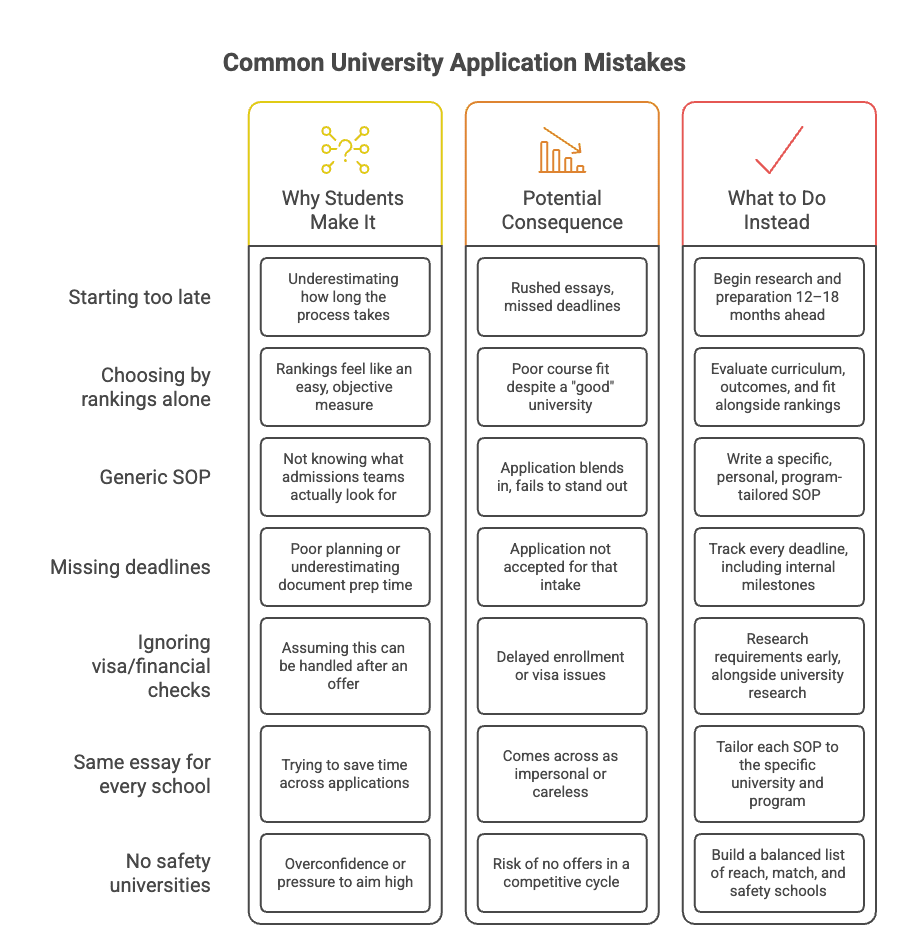
What to do instead: Begin researching universities and courses at least 12–18 months before your intended intake, and start test preparation and shortlist-building well before application portals open.
2. Choosing Universities Based Only on Rankings
What goes wrong: Students often build their entire shortlist around global ranking tables, without looking deeper into the specific course.
Why it matters: A university may rank highly overall but still be a poor choice for your intended course. Rankings don’t tell you about curriculum design, faculty specialization, teaching style, or how well the program fits your career goals.
What to do instead: Use rankings as one input, not the deciding factor. Check the curriculum, entry requirements, graduate outcomes, location, tuition fees, and whether your academic background actually meets the program’s requirements.
3. Applying Without Understanding Entry Requirements
What goes wrong: Students apply to programs without checking whether their academic background, subject combination, or grades meet the minimum entry criteria.
Why it matters: Entry requirements vary significantly by university, program, and country, and applying without meeting them usually results in an automatic rejection, wasting time, effort, and application fees.
What to do instead: Read the official admissions page for each specific program, not just the university’s general page, and confirm that your qualifications align before applying.
4. Applying to Universities That Don’t Match Your Profile
What goes wrong: Some students apply only to extremely selective universities, while others apply only to “safe” options, without an honest assessment of where they actually stand.
Why it matters: An application list that isn’t calibrated to your academic profile, test scores, and extracurriculars either wastes applications on unrealistic reaches or undersells what you’re capable of achieving.
What to do instead: Build a shortlist with a realistic mix of reach, match, and safety universities based on your actual academic and extracurricular profile. [Internal Link: University Selection and Profile-Matching Guide]
5. Having an Unrealistic University Shortlist
What goes wrong: Applying to only one or two “dream” universities, or applying to ten universities with no clear reasoning behind the list.
Why it matters: A shortlist that’s too narrow leaves no room for rejection. A shortlist that’s too broad, without strategy, spreads your time and effort too thin across applications that don’t get the attention they need.
What to do instead: Aim for a balanced shortlist — commonly 6 to 10 universities, though this varies by country and course — split across reach, match, and safety categories.
6. Ignoring Course-Specific Requirements
What goes wrong: Students assume that if they meet a university’s general entry criteria, they automatically qualify for any course within it.
Why it matters: Many programs have additional requirements — specific prerequisite subjects, portfolios, entrance tests, or interviews — that aren’t listed on the university’s general admissions page.
What to do instead: Always check the requirements page for the exact course or department you’re applying to, not just the university overall.
7. Missing Application Deadlines
What goes wrong: Students underestimate how long documentation, test scheduling, and essay writing take, and end up missing submission windows.
Why it matters: Most universities abroad do not accept late applications, and missing a deadline can mean waiting an entire additional year, or an intake, to reapply.
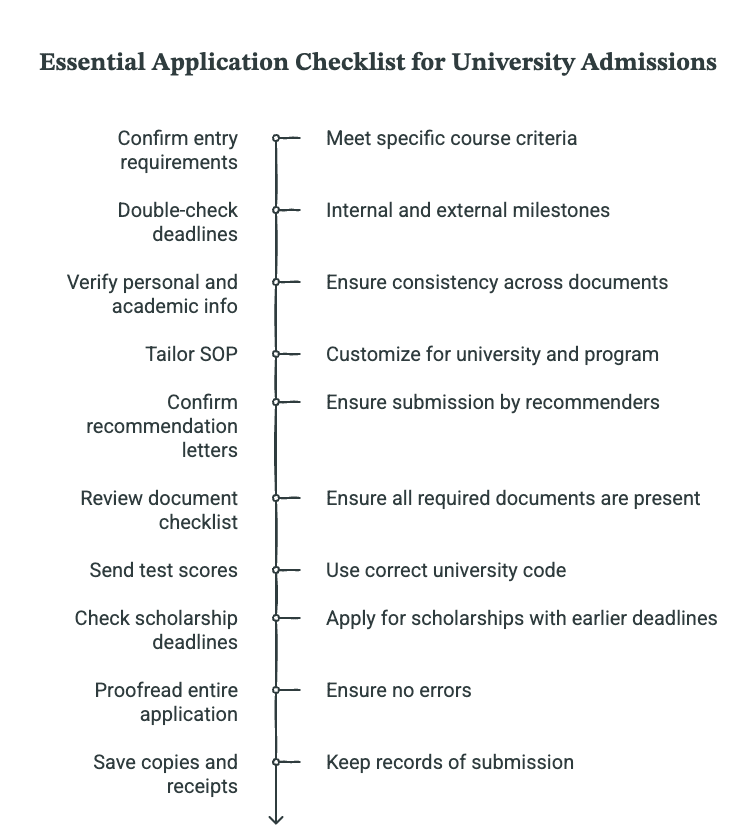
What to do instead: Build a personal deadline tracker for every university that includes internal milestones — document collection, test dates, essay drafts — not just the final submission date.
8. Failing to Understand Different Application Rounds or Intakes
What goes wrong: Students don’t realize that many universities offer multiple intakes (such as fall and spring) or rounds (such as early and regular decision), each with different deadlines and, sometimes, different odds.
Why it matters: Applying in the wrong round or missing an earlier, more favorable intake can affect both admission chances and scholarship availability.
What to do instead: Research each university’s specific intake calendar and application rounds early, since these vary by university and country and are rarely identical across your shortlist.
9. Not Researching Scholarships Early
What goes wrong: Students look into scholarships only after receiving an offer, when many scholarship deadlines have already closed or overlap with the main application.
Why it matters: Some of the most valuable scholarships are tied to the same deadline as the admission application itself, or require separate essays and documents submitted in advance.
What to do instead: Research university-specific, government, and external scholarships during the shortlisting stage, and note their deadlines alongside your application deadlines. [Internal Link: Scholarship Guide for Studying Abroad]
10. Underestimating Standardized Test Requirements
What goes wrong: Students assume they can prepare for exams like the SAT, GRE, or GMAT in a few weeks, or delay booking a test date.
Why it matters: Test slots fill up, especially close to deadlines, and score reports can take time to process and send to universities. A low score with no time to retake it can limit your options.
What to do instead: Take standardized tests early enough to allow for at least one retake if needed, and confirm each university’s specific score requirements beforehand. [Internal Link: SAT Preparation Guide]
11. Taking Language Proficiency Tests Too Late
What goes wrong: Students treat English proficiency tests such as IELTS or TOEFL as a formality and book them close to the deadline.
Why it matters: Score validity periods, retake waiting times, and result processing delays can all interfere with submission timelines if the test is taken too close to a deadline.
What to do instead: Schedule your language proficiency test several months in advance, and check each university’s minimum score requirement for your specific course. [Internal Link: IELTS Preparation Guide]
12. Submitting Incomplete or Incorrect Documents
What goes wrong: Applications are submitted with missing pages, wrong document formats, unclear scans, or documents that don’t match what the university specifically requested.
Why it matters: Incomplete documentation is one of the most common reasons applications are delayed or rejected outright, since admissions teams generally won’t chase applicants for missing paperwork.
What to do instead: Create a document checklist for each university based on their specific requirements, and review every file before submission for completeness and clarity.
13. Making Errors in Academic Transcripts or Personal Information
What goes wrong: Simple mistakes — a wrong grade, an outdated address, a misspelled name, or mismatched information between documents — go unnoticed until after submission.
Why it matters: Even small inconsistencies between your application form, transcripts, and identification documents can raise questions during verification and slow down or jeopardize your application.
What to do instead: Cross-check every document against your application form line by line, and ask a second person to review for errors you might have missed.
14. Writing a Generic SOP or Personal Statement
What goes wrong: Students write a Statement of Purpose that could apply to almost any student applying to almost any program — vague statements about “passion” and “always wanting to help people,” with no specifics.
Why it matters: Admissions committees read thousands of these statements. A generic SOP doesn’t give them any reason to remember you or believe you’re genuinely suited to their specific program.
What to do instead: Write a specific, personal SOP that connects your actual experiences to the particular program, explaining why that course, at that university, fits your goals. [Internal Link: How to Write a Winning SOP]
15. Using AI or Copying Content Without Personalization
What goes wrong: Students copy SOP templates from the internet or generate content with AI tools and submit it with little to no personal editing.
Why it matters: Admissions officers are experienced at recognizing generic or templated writing, and unoriginal or overly generic essays can hurt credibility and weaken an otherwise strong application.
What to do instead: If you use templates or AI tools for structure or brainstorming, rewrite the content in your own voice with specific personal details, and always proofread the final draft yourself.
16. Focusing on Achievements Instead of Telling a Compelling Story
What goes wrong: SOPs and essays often read like a list of achievements copied from a resume, rather than an explanation of the applicant’s motivations, growth, and goals.
Why it matters: Universities can already see your grades and activities elsewhere in the application. An essay that only repeats this information wastes the one space meant to show who you are.
What to do instead: Choose two or three meaningful experiences and explain what you learned from them and how they shaped your academic direction, rather than listing every accomplishment.
17. Sending the Same Application to Every University
What goes wrong: Students write one SOP or essay and submit a lightly edited version — sometimes with the wrong university name still in the text — to every school on their list.
Why it matters: Admissions teams can tell when an essay wasn’t written with their specific program in mind, and this can come across as a lack of genuine interest.
What to do instead: Tailor each SOP to reference specific aspects of that university’s program, faculty, or resources, even if the core structure of your story stays the same.
18. Weak or Poorly Chosen Recommendation Letters
What goes wrong: Students ask for recommendation letters from the most senior person available, rather than someone who actually knows their work well, or they ask too close to the deadline.
Why it matters: A generic letter from someone who barely knows you is far less useful than a detailed, specific letter from a teacher or supervisor who can speak to your actual strengths.
What to do instead: Choose recommenders who know you well, give them plenty of notice, and share your goals and key achievements to help them write a more specific, useful letter.
19. Ignoring Extracurricular Activities and Profile-Building Opportunities
What goes wrong: Students focus exclusively on grades and test scores, without engaging in activities, projects, or experiences that build a well-rounded profile.
Why it matters: Many universities abroad, particularly for undergraduate admissions, look at the whole applicant — leadership, initiative, and genuine interests — not just academic scores.
What to do instead: Get involved in activities aligned with your intended field of study well before applying, so they form a natural, authentic part of your story rather than a last-minute addition. [Internal Link: Profile-Building for Study Abroad Applications]
20. Not Checking Visa and Financial Requirements Early
What goes wrong: Students assume visa applications and financial documentation can be handled quickly after receiving an admission offer.
Why it matters: Visa processes often require specific financial proofs, sometimes held for a minimum period, and processing times vary by country. Starting late can delay or jeopardize your ability to join on time.
What to do instead: Research the visa and financial documentation requirements for your target countries as soon as you begin shortlisting, since requirements differ significantly by country. [Internal Link: Study Abroad Visa Guidance]
21. Underestimating the Cost of Studying and Living Abroad
What goes wrong: Students and parents budget for tuition fees alone, without accounting for accommodation, health insurance, travel, and day-to-day living costs.
Why it matters: Being under-prepared financially can create serious stress during studies and, in some cases, affect visa compliance if minimum funds aren’t maintained.
What to do instead: Research the full cost of living in your specific city and country, not just tuition, and build a realistic budget before finalizing your university choices. [Internal Link: Cost of Studying Abroad Guide]
22. Applying Only to Highly Competitive Universities
What goes wrong: Some students, often encouraged by family or peer pressure, apply exclusively to a small number of extremely selective universities.
Why it matters: Without any match or safety options, a difficult admissions cycle can leave a student with no offers at all, despite being a genuinely strong applicant.
What to do instead: Balance your list so that even in a competitive year, you have realistic offers to choose from, alongside your reach applications.
23. Not Proofreading the Application
What goes wrong: Applications are submitted with typos, formatting issues, broken links to portfolios, or sections left incomplete because of a rushed final review.
Why it matters: Careless errors can create an impression of low attention to detail, even when the underlying content of the application is strong.
What to do instead: Set aside dedicated time to review the entire application — not just the essay — at least a day before the deadline, and ask someone else to review it as well.
24. Failing to Track Applications and Deadlines
What goes wrong: Students manage multiple applications across different portals, each with its own login, deadline, and requirements, without a single organized system to track them.
Why it matters: It’s easy to lose track of which documents have been submitted where, and missing a step for even one university can result in an incomplete or late application.
What to do instead: Use a single spreadsheet or tracker listing every university, its deadlines, required documents, and submission status, updated as you progress. [Internal Link: Study Abroad Application Checklist]
25. Assuming Admission Is Guaranteed After Submitting the Application
What goes wrong: Students consider the process finished once they submit their application, and stop monitoring emails, portals, or requests for additional information.
Why it matters: Universities sometimes request additional documents, clarifications, or interviews after submission, and missing these follow-ups can affect the outcome even after a strong initial application.
What to do instead: Continue checking your application portals and email regularly after submission, and respond promptly to any requests until you receive a final decision.
Study Abroad Application Checklist: 10 Things to Do Before You Submit
Common Mistakes at a Glance
Frequently Asked Questions
What are the biggest mistakes students make when applying abroad? The most common mistakes include starting the process too late, choosing universities based only on rankings, writing generic SOPs, missing deadlines, and not researching visa or financial requirements early. Most of these mistakes come down to poor planning and insufficient research into program-specific requirements rather than a lack of academic ability.
When should I start applying to universities abroad? Most students should begin researching universities and courses at least 12 to 18 months before their intended intake. This gives enough time for standardized tests, language proficiency exams, essay drafts, and recommendation letters, all of which take longer than most students expect.
How many foreign universities should I apply to? There’s no single correct number, but many students apply to somewhere between 6 and 10 universities, balanced across reach, match, and safety categories. The right number depends on your budget, the country, the course, and how much variation exists in your target programs’ requirements.
Can a strong academic record compensate for a weak SOP? Not always. Many universities abroad evaluate applications holistically, meaning a poorly written or generic SOP can weaken an otherwise strong profile. Academic records matter, but the SOP is often where admissions committees assess motivation, self-awareness, and fit for the specific program.
Is it okay to use AI when writing an SOP? AI tools can help with brainstorming or structuring ideas, but the final SOP should be written and edited in your own voice with specific personal details. Submitting largely AI-generated or unedited content risks sounding generic, and admissions officers are generally experienced at spotting this.
What happens if I miss a university application deadline? In most cases, the university will not accept a late application for that intake, meaning you would need to wait for a later intake or the following year to apply again. Deadlines and any exceptions vary by university, so it’s worth checking directly with the admissions office if you’re close to missing one.
Should I apply to universities based on rankings? Rankings can be a useful starting point, but they shouldn’t be the only factor. It’s important to also check the specific course curriculum, entry requirements, graduate outcomes, and whether the program genuinely matches your academic background and career goals.
How can I make my university application stronger? Focus on building a profile aligned with your intended field well before applying, writing a specific and personal SOP for each university, choosing recommenders who know you well, and giving yourself enough time to prepare test scores and documents without rushing.
What documents are commonly required for studying abroad? Commonly required documents include academic transcripts, standardized test scores, language proficiency test results, a Statement of Purpose, recommendation letters, a passport copy, and financial documentation for visa purposes. Exact requirements vary by university, program, and country, so it’s important to confirm the specific list for each application.
Should I apply on my own or use a study abroad consultant? Both approaches can work, and many students successfully apply on their own with careful planning. A consultant can be helpful if you want structured support with university shortlisting, documentation, essay feedback, and deadline tracking, particularly when managing multiple applications across different countries at once.
Final Thoughts
Many rejected or incomplete applications come from avoidable mistakes done in a hurry or without knowing how the process proceeds. If you start early, do some research into available programs beyond rankings, write a strong statement of purpose (SOP), and keep track of deadlines, your chances for success will increase.
One maxim that becomes apparent is that successful applications take time and cannot be assembled right before submitting them. Use sufficient time to make the right choices along the way.
Every case is different; the requirements are different depending on various factors such as university, program, or country. If you want to share your shortlist or SOP with someone or discuss your strategy, the team of experts is ready to help you.